

Edge AI in video surveillance refers to the use of artificial intelligence algorithms that process and analyze video data locally on the camera or nearby devices, rather than sending all data to a central server. This enables real-time detection of events such as unauthorized access, unusual behavior, or safety incidents, allowing for immediate alerts and faster response times while reducing bandwidth and enhancing privacy.
Video surveillance has come a long way from just recording footage for later review. Today, smarter cameras can do more than record footage; they can analyze video locally and flag events that may need attention. Edge AI is the technology pushing this change by letting devices analyze video right where it’s captured. This means faster alerts, less data clogging up networks, and better privacy for everyone involved. If you’ve ever wondered how security systems can spot trouble instantly without sending everything to a faraway server, getting to know Edge AI is the place to start.
What is Edge AI Computing?
Edge AI Computing refers to utilizing edge computing hardware to run AI algorithms locally rather than sending data to a remote cloud server. This allows connected local devices to benefit from AI without data having to travel back and forth to distant data centers, dramatically reducing delays often seen with cloud-based AI. Learn more about what edge AI computing is and its benefits here.
What is Edge AI Computing in Video Surveillance?
Edge AI in video surveillance simply means that artificial intelligence algorithms process video data right where it’s captured, directly on the camera or an adjacent edge device, instead of relying on distant cloud servers or central computers. This approach capitalizes on local processing power and storage capacity, allowing analysis and decisions to happen in real time. Imagine your security camera not as a passive recorder but as an intelligent sentinel capable of almost instantly identifying suspicious behavior without waiting for external servers to chug through hours of footage.
This localized processing dramatically speeds up response times because it eliminates the delays caused by transmitting large video files over networks. Instead of streaming all the raw footage somewhere else for analysis, a method often plagued by lag and bandwidth limitations, the device itself analyzes key details immediately. Depending on the model and system design, it can detect motion patterns, identify object types, flag unattended objects, or support face-recognition workflows where legally permitted and properly configured.
Processing data locally also reduces the amount of information that needs to be sent over networks. Rather than burdening systems with continuous video streams, Edge AI devices transmit only essential alerts or metadata, conserving bandwidth and improving privacy. After all, fewer raw videos traveling through external servers means less exposure to potential hacking or unauthorized access.
Consider how this contrasts with traditional surveillance setups where cameras are mere eyes feeding footage to central systems. Those systems then analyze the data in bulk, creating bottlenecks during high traffic times or leaving security staff dependent on slow retrieval processes during critical events. Edge AI reverses this by putting brains in the camera itself; it makes each device an autonomous unit capable of making smart decisions independently while still coordinating with broader security networks when needed.
Moreover, many Edge AI platforms use specialized hardware such as NVIDIA Jetson modules, Google Coral Edge TPU devices, Intel edge AI hardware, GPUs, NPUs, or other AI accelerators designed to run inference efficiently near the data source. This means they can run complex algorithms continuously without overheating or draining excessive energy, even in compact, remote cameras.
For professionals deploying surveillance systems, embracing Edge AI means prioritizing devices equipped with such processors and ensuring software compatibility for seamless updates and integration. This setup enhances both reliability and future-proofing.
Enhancing Video Monitoring with Edge AI
Edge AI transforms traditional surveillance by pushing intelligent decision-making to the source, the cameras themselves. Instead of sending endless streams of raw footage back to a central server, these smart devices analyze video in real time, dramatically improving responsiveness and efficiency.
This shift means security personnel no longer have to sift through hours of grainy recordings to find relevant incidents; instead, they receive timely, actionable alerts pinpointing exactly when and where suspicious activity occurs. Imagine a school where cameras flag a person entering a restricted area after hours and quickly notify authorized staff, giving them a faster opportunity to assess the situation and respond.
The core advantage here is speed. Because data analysis happens on-device or nearby, latency can be reduced compared with sending video to a distant server, although actual response time depends on the hardware, model complexity, network design, and alerting workflow. For security teams, those milliseconds can be the difference between stopping an incident before it escalates or simply reacting after the damage is done.
For example, a retail video system might flag suspicious movement, restricted-area access, or unusual activity patterns so staff can review the alert and respond appropriately. This on-the-spot scrutiny wouldn’t be possible if video had to travel across networks to distant servers first.
More than quick alerts, Edge AI-enabled cameras are capable of contextual understanding. They identify various object types such as people, vehicles, or even animals, not just motion in general, which drastically decreases false alarms that plagued older systems.
In busy retail environments or city streets bustling with movement, traditional motion sensors often triggered needless warnings. But now, cameras analyze behavior patterns locally and only flag genuinely suspicious activity. This precision makes monitoring scalable and far less taxing on resources like bandwidth and storage.
Edge AI can significantly reduce bandwidth and storage needs because raw video does not always need to be continuously uploaded for remote review. Actual savings depend on camera count, resolution, retention policy, event frequency, compression settings, and whether the system stores full video, clips, or metadata. This efficiency not only lowers operational costs but also boosts privacy compliance by limiting raw footage leaving the premises.
Another layer of enhancement comes from user-friendly interfaces made possible by Edge AI’s local processing power. Security managers no longer need IT specialists to retrieve footage locked deep in server archives through complex ticketing systems. Instead, authorized personnel can promptly access relevant video clips via mobile phones or laptops anytime they need them. This accessibility accelerates investigations and decision-making while reducing frustrations often associated with legacy surveillance setups.
When considering adopting Edge AI for video monitoring, prioritize solutions offering customizable alert thresholds and detailed analytics tailored to your environment’s unique needs. These features ensure you’re not overwhelmed by unnecessary notifications but remain confident that critical risks won’t slip past unnoticed.
Benefits of Edge AI Systems for Video Surveillance
Reduced bandwidth usage
Instead of sending continuous raw video to a central server, Edge AI systems can often send only alerts, metadata, or selected clips. That is especially useful for large camera networks, remote sites, schools, warehouses, retail stores, and city surveillance systems.
Faster alerts and response times
Video can be analyzed on the camera, gateway, or nearby edge device instead of waiting for footage to travel to a cloud server. That can help security teams respond sooner to events like restricted-area access, loitering, crowding, or safety incidents.
Enhanced Privacy & Security
Raw video feeds do not need to leave the local network to be analyzed, which protects sensitive data, prevents interception, and helps meet strict privacy compliance standards (e.g., HIPAA).
Lower storage requirements
Because the system can filter out irrelevant footage and prioritize important clips, organizations may not need to store as much raw video. Actual savings depend on camera count, resolution, retention rules, and how the system is configured.
Improved privacy and data control
Keeping more video analysis local can reduce how much sensitive footage leaves the premises. This can support privacy goals and compliance efforts, although security policies, access controls, and retention practices still matter.
Better reliability during network issues
Edge AI cameras or local devices may continue detecting and recording events even if internet connectivity is interrupted. Remote alerts, cloud syncing, or centralized dashboards may still be limited until the connection returns.
Fewer false alarms
Edge AI can distinguish between object types, such as people, vehicles, animals, or packages, instead of triggering alerts based on basic motion alone. This can make surveillance alerts more useful and less noisy.
Potential cost efficiency
Edge AI may reduce cloud storage, bandwidth, and manual review costs, though it can require higher upfront investment in smarter cameras, edge devices, or AI-capable hardware.

Exploring the Advantages of Edge AI in Video Surveillance
One of the chief benefits of Edge AI in video surveillance lies in how it handles bandwidth. Unlike traditional centralized architectures that funnel massive streams of raw video to distant servers, Edge AI processes video data right at the camera or nearby. This local processing means only useful metadata or alert signals need to travel across the network.
For facilities like schools or office complexes, this translates into substantial bandwidth savings. Less network traffic doesn’t just free up capacity; it also reduces congestion and potential system slowdowns, making the entire surveillance infrastructure more responsive and scalable.
Security and privacy take a significant leap forward in local setups. When sensitive video footage remains onsite rather than streaming continuously to cloud servers, the surface for cyberattacks shrinks dramatically.
This local containment means personal or sensitive information isn’t exposed unnecessarily, aligning well with increasingly strict data protection regulations worldwide. Processing data at the edge also allows immediate disposal of irrelevant footage without ever leaving the device, a feature central to maintaining privacy standards while still enabling robust surveillance capabilities. These operational and security improvements naturally influence considerations around reliability and energy efficiency.
Reliability stands as another pillar where Edge AI demonstrates clear superiority. Centralized systems can lose functionality when network connectivity fails, or cloud access is interrupted. By contrast, edge devices may continue performing local detection and recording during connectivity issues, although alerts, remote access, updates, and cloud syncing may be limited until the connection is restored.
This resilience ensures critical security monitoring never falters due to connectivity problems, which can be vital in emergency scenarios requiring swift action. Moreover, localized processing yields notable energy efficiency gains. Transmitting bulky video files back and forth consumes considerable power, not just in cameras but across networking equipment and data centers. Edge AI’s ability to reduce unnecessary data transmission may also lower energy use across networking equipment, storage systems, and cloud infrastructure, especially in large deployments. This drop in power use also translates into a smaller carbon footprint and sometimes reduced operational costs over time.
Edge AI can also reduce false alarms by distinguishing between different object types, such as people, vehicles, animals, or packages, instead of reacting to any movement in the camera’s view. Traditional motion-based systems may trigger an alert for shadows, rain, tree branches, insects, or animals, creating unnecessary noise for security teams. With Edge AI, the system can better understand what is moving and whether it matches the type of event the organization actually cares about.
For example, a warehouse may want alerts for people entering restricted areas after hours, but not for forklifts moving during normal operations. A retail store may want to flag loitering near an entrance or movement in a stockroom, while ignoring routine customer traffic. By filtering alerts based on object type, location, time of day, and behavior patterns, Edge AI can make surveillance notifications more relevant, easier to prioritize, and less likely to overwhelm staff with false alarms.
Real-Time Data Processing and Decisions
Real-time data processing means the system can analyze video footage the moment it’s captured, without having to send data back and forth to a central server. This local processing can reduce delays by avoiding a round trip to a central server or cloud platform, making alerts faster in many surveillance environments.
The ability to handle analytics at the source also translates into smarter bandwidth use. Instead of streaming hours of continuous raw video, an Edge AI camera sends only relevant clips or alert signals. This selective sharing can reduce network congestion, which is especially useful in environments with limited internet capacity or large camera fleets spread across campuses, warehouses, stores, or public facilities.
Beyond speed and efficiency, this approach enhances accuracy too. Accuracy depends on the model, camera placement, lighting, weather, training data, object type, and environment. Well-configured systems can reduce false alarms, but they still require testing, tuning, and human oversight for critical security decisions.
That balance between quick recognition and correctness is essential, over-alerting drains resources and attention, while under-alerting risks missing critical incidents. In practice, faster local analysis can help security teams respond sooner because alerts can be generated closer to the moment an event occurs, rather than after footage is transmitted and processed elsewhere. This improvement doesn’t just add convenience; it could be life-saving during emergencies like fires or intrusions.
What makes this possible is the deployment of powerful processors right on the camera itself or nearby edge devices. These chips run machine learning models tailored to recognize patterns such as unusual motion, crowd gatherings, or even specific behaviors, like someone lingering unusually long near a restricted area. Once detected, algorithms instantly classify threats and either notify human operators or trigger automated safety protocols like locking doors or activating alarms.
Scalability and Cost Efficiency
As surveillance demands grow, more cameras, expanded coverage areas, the linear scalability of Edge AI hardware becomes valuable. Instead of investing heavily in costly centralized server upgrades or expanding cloud capacity, organizations can incrementally add edge nodes where needed.
Appreciating these advantages is essential when building or upgrading video surveillance systems today. The shift towards decentralized intelligence offers not only technical improvements but also practical benefits that protect users’ information and ease long-term management challenges inherent to large-scale deployments.
With these advantages and strengths in mind, the next step is understanding how these edge setups compare against more traditional cloud-based solutions to see which model best fits specific needs and environments.
Comparing with Cloud Solutions
Cloud-based video surveillance often sends footage or event data from cameras to remote servers for processing and analysis. This can introduce latency and increase bandwidth usage, especially when high-resolution video is streamed continuously. Edge AI reduces that dependency by performing some or all analysis locally on the camera, gateway, or nearby edge device, which can support faster alerts and more efficient use of network resources. In critical security situations, even a delay of half a second matters when every moment counts.
Edge AI helps reduce this issue by processing video on the camera, gateway, or nearby edge device instead of relying entirely on remote servers. This can enable faster alerts and more efficient decision-making, though actual latency depends on the system’s hardware, AI model, network setup, and alerting process.
Besides speed, cost is another area where Edge AI shifts the balance. When relying on cloud storage and analytics, organizations rack up recurring expenses that include bandwidth fees for streaming large amounts of high-definition video constantly and charges for storing data on cloud servers long-term.
By contrast, Edge AI reduces bandwidth use by processing footage locally, only sending relevant clips or alerts when necessary. This means less demand on network infrastructure and reduced need for costly cloud storage subscriptions. Over time, these savings add up, making Edge AI an appealing option for budget-conscious schools, businesses, and municipalities.
Data privacy also plays a major role in this comparison. Sending sensitive video streams over the internet to a cloud provider exposes footage to potential interception or breaches. Processing video on-site means data stays within secure physical premises as much as possible, significantly mitigating privacy risks and compliance concerns.
It’s worth noting that while cloud solutions offer almost unlimited scalability, spinning up more servers quickly as you add cameras, Edge AI’s scalability depends on available local hardware capacity and requires careful planning for larger deployments. Still, many organizations find this trade-off worthwhile in exchange for reduced operating expenses and better control over their surveillance ecosystem.
When considering which system fits best, think about your priorities: if you need lightning-fast response times, enhanced privacy safeguards, and long-term cost efficiencies, Edge AI holds clear advantages. On the other hand, if unlimited scalability with minimal upfront investment is your focus, cloud systems may still have appeal despite their higher running costs.

Emerging Trends in Surveillance Technology
Surveillance technology has moved well beyond simply recording footage; it is becoming an active participant in security through smarter, faster, and more interconnected systems. One unmistakable trend is the deepening integration of Edge AI with the Internet of Things (IoT).
Imagine a network where cameras communicate seamlessly with door sensors, alarms, and even environmental controls to orchestrate a synchronized response to unusual activity. This smart ecosystem allows for rapid local decision-making without waiting for cloud servers, reducing delays and sharply improving reaction times during critical incidents.
What makes this integration powerful is how these IoT devices collectively enhance situational awareness. For instance, if a motion sensor near a restricted area detects movement after hours, connected Edge AI cameras immediately focus on that zone, analyze the behavior using advanced algorithms, and alert security personnel if something seems amiss. This combination transforms reactive surveillance into proactive protection by enabling real-time detection and intervention right at the source.
For businesses or facilities considering upgrades, it’s important to assess the compatibility of existing IoT infrastructure with emerging Edge AI platforms. Prioritizing devices that can communicate over secure networks while supporting AI inference locally helps future-proof your surveillance setup. Additionally, look for systems that streamline data sharing between sensors, this enhances overall accuracy and reduces false alarms caused by isolated data points.
Parallel to hardware advancements is the rapid evolution of deep learning algorithms powering video analysis. Modern AI models train on immense datasets containing diverse scenarios, everything from different lighting conditions to varied human behaviors, which dramatically improves recognition precision. As a result, these systems can identify subtle cues indicative of suspicious actions like shoplifting or unauthorized access far earlier than traditional motion detection alone.
This evolving intelligence means surveillance cameras won’t just record incidents, they will anticipate potential threats based on patterns learned through continuous training. For example, an AI might detect when someone loiters unusually long or attempts to bypass security checkpoints, triggering alerts instantly. Such predictive capabilities emphasize not only catching crimes but preventing them before they escalate.
When investing in AI-driven surveillance solutions, it is vital to understand how frequently vendors update their models with new data and how customizable their algorithms are for specific environments. Flexible systems allow tailoring sensitivity levels to reduce false positives and align alerts with your unique security priorities.
Choosing the Right AI for Your Needs
Selecting an Edge AI solution isn’t as simple as picking the fanciest or most expensive device on the market. It starts with a clear understanding of your environment and security goals because different settings demand different capabilities.
For example, a bustling urban center filled with foot traffic requires AI that excels in analyzing complex movement patterns and crowded scenes, quickly distinguishing between normal hustle and suspicious behavior. In contrast, a quiet residential neighborhood might prioritize person detection, package detection, license plate capture, perimeter alerts, or familiar-person alerts, depending on privacy rules and local regulations.
This environmental consideration leads naturally into another vital factor: budget. While it might be tempting to look for the cheapest option, investing in a slightly more capable Edge AI camera can save money over time by reducing bandwidth costs, avoiding false alarms, and streamlining incident investigations via real-time alerts.
Remember, upfront costs vary widely based on camera quality, onboard processing capability, analytics features, storage, installation, licensing, and integration requirements. However, this upfront investment often offsets ongoing fees associated with cloud storage or subscription services on less autonomous systems.
Beyond environment and cost, defining your security objectives is crucial. Are you primarily looking to deter theft? Monitor employee safety? Or maybe you want to keep tabs on specific areas prone to after-hours activity? Clarifying these priorities shapes which features matter most, motion detection sensitivity, person re-identification, crowd monitoring, or license plate recognition, so you don’t end up paying for functionalities you won’t use.
- Compatibility: Check that the Edge AI solution works with your current network cameras and supports standard protocols like ONVIF or RTSP. This avoids costly replacements or integration headaches.
- Vendor Support: Opt for providers that offer reliable technical assistance and frequent firmware updates; technology moves fast, and depending on a responsive partner ensures your system stays secure and effective.
- Scalability: Consider not only your current needs but how they might evolve. A system that scales smoothly lets you add cameras and analytics without starting from scratch.
Taking these factors step-by-step helps demystify the process and improves the chances of selecting an Edge AI system that fits your surveillance challenges and growth plans.
Choosing the right Edge AI in video surveillance is not just about cutting-edge tech, it’s about thoughtful alignment of technology to your unique security needs, budget constraints, and future expansion. Making informed choices today means safer environments tomorrow.
The Right Hardware Solutions
To run these intensive AI models and handle massive datasets efficiently—especially out in the field or at the network edge—choosing the right high-performance hardware architecture is just as critical as choosing your software tools.
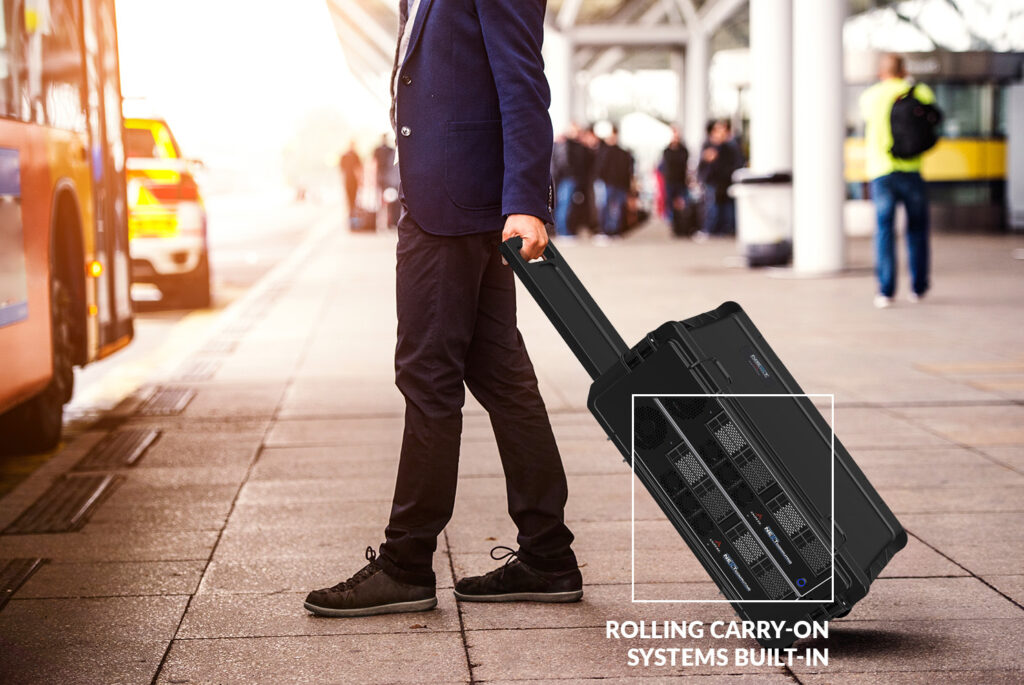
Fly-Away Kits
NextComputing Fly-Away Kits (FAKs) are a self-contained suite of equipment (hardware and software) in a compact, portable form factor for a variety of use cases where location and portability are key factors.
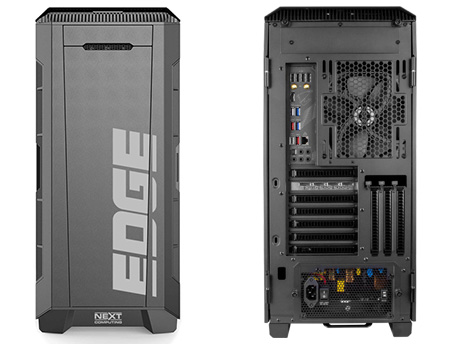
Edge XTP
The Edge XTP tower workstation is a professional-grade platform powered by the Ampere family of high-performance, scalable, power-efficient processors for demanding data-intensive, edge and cloud applications

NextServer-X 2U
The intelligent, compact design of the NextServer-X 2U allows for both easy transport and expandability. Whether you need cyber analytics in the field, or the flexibility to grow your toolset with your changing needs, the NextServer-X 2U deployable server lets you bring your server applications to the network edge.