

Cognitive computing in AI refers to systems designed to mimic human thought processes such as perceiving, learning, reasoning, and problem-solving by integrating machine learning, natural language processing, and neural networks. These systems process vast amounts of structured and unstructured data, adapt to new information, and interact naturally with humans to enhance decision-making and automate complex tasks. The term was popularized by IBM around Watson in the early 2010s, largely as a marketing frame to distinguish “systems that augment human judgment” from the older notion of AI as “machines that replace human thinking.”
A caveat: many practitioners now view “cognitive computing” as an older enterprise AI term rather than a clearly defined technical category. It never gained a universally accepted definition, and many of the capabilities it once described, such as contextual reasoning, natural conversation, and multimodal understanding, are now understood as part of modern AI more broadly, especially foundation models and large language models. The term still appears in enterprise vendor materials and academic surveys, but it is uncommon today for researchers to describe their own work as “cognitive computing.”
What’s the Difference Between Today’s AI and Cognitive Computing?
There isn’t a meaningful technical difference. Cognitive computing was a label attached to a specific era and style of AI system, and modern AI has largely absorbed the capabilities that term was meant to describe. The more meaningful differences are in how those systems were built and how they were presented.
How the Systems Were Actually Constructed
Cognitive computing systems, with Watson as the most familiar example, were typically assembled from multiple components. A system might include a natural language parser, a curated knowledge base or ontology, a retrieval layer, scoring models, and a confidence estimator. Engineers connected these pieces into a pipeline, and much of the system’s domain intelligence lived in hand-built structures such as medical ontologies, legal taxonomies, or expert-authored rules. Moving one of these systems into a new field often required substantial re-engineering.
Today’s frontier AI systems are often built around large transformer models trained on broad datasets. Many language and reasoning-like capabilities emerge from the training process itself rather than from separate hand-engineered modules. Adaptation now often happens through prompting, retrieval augmentation, fine-tuning, tool use, or connections to external knowledge sources instead of rebuilding a domain-specific pipeline from the ground up.
What Each Promised
Cognitive computing was usually positioned as decision support for professionals: the human expert retained authority, while the machine surfaced evidence, ranked options, or helped interpret complex information. The message was intentionally augmentative, in part to reduce concerns that AI would replace human judgment.
Modern AI is positioned much more broadly, spanning general-purpose assistance, content creation, workflow automation, and autonomous agents that can take actions. The framing has shifted from “helps an expert think” toward “helps get the work done.”
Where the Older Approach Still Has an Edge
Because this shift can sound like pure progress, it is worth noting where the older approach still has advantages. Curated knowledge structures are often more auditable because you can trace which rule, source, ontology node, or retrieval result contributed to an answer. Modern generative systems can hallucinate in ways that older symbolic pipelines generally did not, and their reasoning is often much harder to inspect. This is part of why retrieval-augmented generation (RAG) and knowledge graphs remain important: they bring back some of the verifiability that end-to-end learning can lack.
Defining Cognitive Computing in AI
Cognitive computing is not just about programming machines to follow a fixed set of rules. Instead, it describes AI systems designed to process complex information, learn from data, recognize patterns, and support human decision-making in ways inspired by aspects of human cognition. These systems analyze vast amounts of unstructured data, everything from texts and images to voices and sensory inputs, and uncover patterns that would be impossible for us to detect on our own. This ability to sift through noisy, complex information and continuously improve from experience is the hallmark of cognitive computing.
Unlike older rule-based systems, cognitive computing emphasizes adaptive learning, contextual analysis, and interaction with users. It simulates brain-like processes using artificial neural networks, layered machine learning models, and natural language processing. These components allow the system not only to recognize speech or images but also to understand context, interpret meaning, and engage in a dynamic dialogue with users. Think of it as teaching a machine how to think instead of just telling it what to do.
At its core, cognitive computing combines several advanced technologies, machine learning for adaptive learning patterns, natural language processing (NLP) for interpreting human language, and neural networks inspired by the brain’s structure, to emulate human reasoning. This synthesis makes cognitive systems powerful partners in decision-making across diverse fields.
For example, early IBM Watson healthcare projects aimed to use natural language processing and machine learning to analyze medical literature, patient records, and clinical data in support of decision-making. However, healthcare AI systems still require careful validation, clinical oversight, and workflow integration, and they should be described as decision-support tools rather than systems that mirror expert clinical judgment.
The growing interest in AI decision-support tools reflects broader demand for systems that help people analyze complex information, summarize large datasets, and make faster, more informed decisions.
How Cognitive Systems Operate
At their core, cognitive systems work by processing massive streams of data rapidly and efficiently, using sophisticated algorithms inspired by human cognition. Unlike traditional software that follows rigid programmed rules, cognitive systems absorb information much like a brain would, learning, adapting, and evolving from each interaction and dataset they encounter.
This ability to handle enormous volumes of data, from text, images, audio, and beyond, and uncover patterns invisible to humans is what makes them so powerful today. Central to this operation is machine learning, a dynamic process where the system refines its performance over time. Think of it as cultivating a garden: you don’t just plant seedling models once and walk away. You nurture them with fresh data continuously, allowing them to grow in capability and accuracy.
For example, an image recognition model starts by making rough guesses but improves steadily as it encounters more varied examples. This iterative learning mimics how we humans master new skills, through trial, error, and gradual refinement.
Imagine teaching a child to tell different dog breeds apart. When first shown pictures of a golden retriever or a poodle, the child may confuse them or guess incorrectly. However, after seeing dozens or even hundreds more photos with explanations, their recognition sharpens significantly. Similarly, cognitive systems use exposure to vast labeled datasets to improve their ‘understanding’ and decision-making precision.
One feature often associated with cognitive computing (and modern AI for that matter) is contextual analysis: these systems may use information such as time, location, user preferences, prior interactions, or domain-specific data to produce more relevant outputs. Cognitive systems can also be designed to preserve relevant context during a session or across approved interactions, allowing them to tailor responses based on prior inputs, user preferences, or domain-specific history.
Equally important is the interactive nature of cognitive computing. These systems are designed for seamless communication with humans. Natural Language Processing (NLP) enables the understanding of complex spoken or written language nuances, while dialogue engines generate coherent and contextually aware responses.
Virtual assistants like Siri or Alexa demonstrate this by intuitively grasping commands embedded in everyday speech patterns and responding in kind, often clarifying ambiguous requests or asking follow-up questions when needed.
Exploring these fundamental operations reveals why cognitive computing shines in applications demanding both heavy data lifting and fluid human engagement, a combination that traditional rule-based software simply cannot replicate effectively.
Key Components in Cognitive Computing
At the heart of cognitive computing lie several critical components, each performing specialized roles to mirror aspects of human thinking. One of the most foundational elements is the artificial neural network (ANN). Inspired by how neurons connect and communicate in the human brain, ANNs process data through layers, each layer transforming information progressively until an output decision or prediction emerges.
Imagine teaching a system to recognize faces: early layers might detect edges or shapes, while deeper layers identify specific features like eyes or mouths. This layered approach gives cognitive systems the flexibility to deal with complex patterns in images, speech, or other data types. The ability to adapt and improve through experience is what distinguishes ANNs from simple rule-based algorithms.
Natural Language Processing (NLP) plays an equally vital role by building bridges between human language and machine understanding. NLP equips machines with the capability to parse, interpret, and generate human language in ways that feel remarkably natural. This isn’t just about picking up keywords; advanced NLP understands context, idioms, and even sentiment behind words. It allows chatbots and virtual assistants to respond meaningfully and carry on conversations rather than providing rote answers.
The rapid growth of NLP technology is evident in its expanding market value, reflecting businesses’ increasing reliance on AI-powered communication tools for customer service, content analysis, and more. Beyond text, NLP also powers translation apps that bridge language barriers globally, a practical testament to its broad impact.
Moving deeper into processing capabilities, machine learning forms the engine that propels continuous improvement within cognitive computing. Machine Learning (ML) algorithms empower systems to learn from data without explicit programming instructions for every possible scenario. This means a cognitive system improves its accuracy and adaptability as it encounters more examples, much like a person gains expertise over time with practice.
Within ML, deep learning uses multi-layer neural networks to learn complex patterns from large datasets, and some specialized architectures may use very deep networks. This depth enables applications like voice recognition software to distinguish between accents or background noise with impressive precision.
Another crucial technology is knowledge representation, the way a system organizes and reasons about information it has acquired. Cognitive computing goes beyond raw data crunching by integrating structured models such as ontologies and semantic networks. These frameworks give machines a way to represent relationships between concepts logically, supporting inference and reasoning similar to human thought processes.
For example, by encoding medical knowledge into a semantic network, AI can assist doctors by suggesting diagnoses based on symptom patterns rather than mere keyword matches. All these components rely heavily on robust platforms and tools designed to manage large-scale data efficiently.
To handle vast amounts of both structured and unstructured data, text documents, images, sensor readings, cognitive systems leverage cutting-edge data analytics platforms like Apache Spark or Hadoop. These enable parallel processing at enormous scales so insights can emerge quickly from complex datasets.
Complementing this are cloud AI services from major providers such as IBM watsonx and Microsoft Foundry Tools, which provide prebuilt AI capabilities, models, APIs, and infrastructure that developers can use when building AI applications.
Finally, sensory input technologies like computer vision and speech recognition round out cognitive systems’ ability to perceive their environment naturally. Computer vision uses specialized neural networks trained to identify objects, faces, or patterns from images and videos, critical for tasks ranging from autonomous driving to quality control in manufacturing. Meanwhile, automatic speech recognition converts spoken language into text with growing accuracy thanks to advances in acoustic modeling and deep learning.
Together they allow cognitive systems not only to understand what humans say but also to ‘see’ their surroundings in real time, closing the gap between digital intelligence and human perception.
Cognitive computing brings diverse AI techniques under one umbrella, including language understanding, visual recognition, learning algorithms, and knowledge-based reasoning, to create systems that can support more natural interaction and more informed decision-making.
Key Technologies Used in Cognitive Computing
| Component | Role | Example Technologies/Tools |
| Artificial Neural Networks | Learns complex patterns through interconnected layers of artificial neurons | TensorFlow, PyTorch |
| Natural Language Processing | Analyzes, understands, and generates human language | spaCy, Hugging Face Transformers (e.g., BERT) |
| Machine Learning | Learns patterns from data to make predictions or decisions | Scikit-learn, XGBoost |
| Knowledge Representation | Represents concepts, relationships, and rules so systems can reason over knowledge | OWL 2, RDF |
| Data Analytics Platforms | Distributed processing and analysis of large datasets | Apache Spark, Apache Hadoop |
| Cloud AI Services | Provides scalable cloud-based AI capabilities, APIs, models, and infrastructure | IBM watsonx.ai, Microsoft Foundry Tools |
| Computer Vision | Extracts information from images and video, including recognition and object detection | OpenCV, Ultralytics YOLO |
| Speech Recognition | Converts spoken audio into text | Google Cloud Speech-to-Text, Amazon Transcribe |
Through this intricate interplay of components and tools, cognitive computing achieves its signature ability to analyze ambiguous data contexts, with adaptability and contextual awareness rivaling human cognition itself.
Real-World Applications
One of the most discussed applications for cognitive computing has been healthcare, where AI decision-support systems can help analyze medical literature, clinical records, imaging data, or patient information. These tools may assist clinicians by surfacing relevant patterns or evidence, but their usefulness depends on model quality, validation, regulatory requirements, data governance, and clinical oversight.
As the healthcare sector benefits from these breakthroughs, the financial world is likewise harnessing cognitive computing’s power to bolster security and decision-making. Fraud detection is especially critical given the rising complexity and volume of digital transactions. Cognitive systems can help sift through large transactional datasets to identify anomalies, suspicious patterns, or risk signals that may indicate fraudulent activity.
What makes cognitive computing useful across various domains is its emphasis on iterative learning, contextual analysis, and human-AI collaboration, which can help systems handle dynamic or ambiguous real-world information more effectively than purely rule-based approaches. Cognitive computing unlocks hidden insights by mimicking human thought processes but scaling them far beyond individual capacity.
In healthcare, it continuously integrates new research findings and patient responses to fine-tune diagnostic suggestions. In finance, it adapts risk models as emerging fraud techniques evolve. This feedback loop between machine learning and human input produces systems that improve over time, becoming indispensable partners rather than mere tools.
For professionals looking to integrate cognitive computing into their operations, focusing on high-quality data inputs complemented by domain expertise is key. These systems thrive when fed diverse datasets enriched with contextual information, whether medical histories or market variables.
Furthermore, fostering collaboration between technology teams and field specialists ensures that cognitive insights translate into actionable strategies aligned with real-world challenges.
Beyond healthcare and finance, other sectors, from retail leveraging image recognition for customer experience enhancement to autonomous vehicles relying on object detection, stand to gain from these advances. Each application shares a common thread: turning unstructured, complex data into clear, reliable knowledge for smarter decisions. As cognitive computing continues to evolve, its real-world applications will only deepen their roots in everyday professional practices, rewriting what’s possible in problem-solving and innovation.
The future of cognitive computing depends on how organizations apply modern AI responsibly, with attention to transparency, privacy, governance, validation, and human oversight.
The Right Hardware Solutions
To run these intensive AI models and handle massive datasets efficiently—especially out in the field or at the network edge—choosing the right high-performance hardware architecture is just as critical as choosing your software tools.

Fly-Away Kits
NextComputing Fly-Away Kits (FAKs) are a self-contained suite of equipment (hardware and software) in a compact, portable form factor for a variety of use cases where location and portability are key factors.
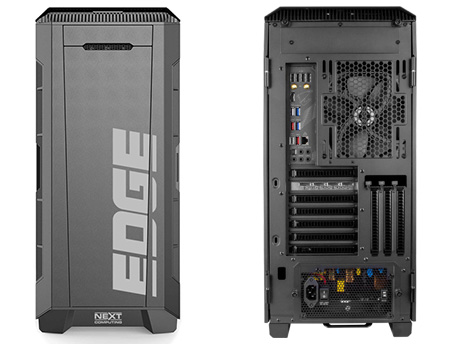
Edge XTP
The Edge XTP tower workstation is a professional-grade platform powered by the Ampere family of high-performance, scalable, power-efficient processors for demanding data-intensive, edge and cloud applications

NextServer-X 2U
The intelligent, compact design of the NextServer-X 2U allows for both easy transport and expandability. Whether you need cyber analytics in the field, or the flexibility to grow your toolset with your changing needs, the NextServer-X 2U deployable server lets you bring your server applications to the network edge.