

The role of AI in edge networking is to enable real-time, intelligent data processing and decision-making closer to data sources such as IoT devices, smartphones, gateways, routers, and local servers, reducing latency and improving reliability and security. By deploying AI algorithms at the edge, networks achieve enhanced security, efficient bandwidth usage, proactive anomaly detection, and autonomous management functions that are critical for applications requiring immediate responses and high availability.
In practical terms, edge networking provides the local connectivity and computing infrastructure, while AI makes that infrastructure more responsive, automated, secure, and efficient. Together, they enable real-time applications that would be slower, more expensive, or less reliable if every decision depended on the cloud.
The Emergence of AI in Edge Network Environments
The rise of AI in edge computing isn’t simply about processing power moving closer to the source of data; it’s about fundamentally reshaping the speed and efficiency with which decisions happen. When AI algorithms run locally on edge devices, whether they’re sensors on factory floors, traffic cameras, or wearable health monitors, they can analyze data almost instantaneously without waiting for instructions from distant cloud servers. This immediacy means critical operations like anomaly detection, safety monitoring, and real-time control become vastly more responsive.
Consider that sending every bit of raw data back to a central cloud would be impractical; bandwidth limits and latency create bottlenecks that slow down systems dependent on split-second responses. By embedding AI within the edge, much of this data is pre-processed or filtered locally, so only condensed insights or exceptions are sent upstream. This approach not only conserves network resources but also enhances privacy and security by minimizing sensitive information transmission.
To successfully deploy AI at the edge, it’s crucial to understand the architecture layering, from lightweight AI models running on endpoint devices to more sophisticated processing at gateway nodes or micro data centers. Organizations should prioritize modular deployment approaches that fit the target hardware, which may include containers, lightweight runtimes, native applications, model-serving tools, or hardware-specific frameworks.
Another critical aspect is handling intermittent connectivity. Edge environments often operate in locations where constant internet access isn’t guaranteed, think remote industrial sites or mobile autonomous vehicles. Here, local AI systems should be designed to continue handling critical local functions during connectivity issues, while non-urgent tasks such as cloud syncing, centralized analytics, dashboard updates, and model updates can resume when the connection returns.
The result is a decentralized intelligence network where local nodes perform immediate analysis and control, while centralized clouds take on broader trends analysis, model retraining, and strategic orchestration. This collaboration between distributed AI and centralized systems forms the backbone of modern edge networking’s power.
| Benefit | Explanation |
| Reduced Latency | Local decision-making avoids delays caused by cloud round-trips |
| Bandwidth Efficiency | Data filtering reduces network load |
| Enhanced Privacy & Security | Sensitive data processed locally limits exposure risks |
| Improved Reliability | Edge AI can continue many selected local functions during connectivity issues |
| Scalability | Modular edge nodes expand without overwhelming central resources |
| Network & traffic management | Identify congestion, balance workloads, allocate bandwidth, and manage endpoints |
Dive deeper into the Benefits of AI Edge Computing here.
For businesses eager to leverage this shift, focus first on understanding specific application needs, whether it’s split-second safety alerts or complex predictive maintenance, and tailor AI models accordingly. Lightweight neural networks or rule-based algorithms might be ideal for resource-constrained devices, while more powerful inference engines fit higher-tier edge nodes.

Intelligent Edge Devices: Enhancing Capabilities
Intelligent edge devices bring computing power closer to where data is generated, allowing for faster local decisions in situations where sending data to the cloud would add unacceptable delay, cost, or reliability concerns. These devices, equipped with embedded AI algorithms and sensors, process data locally, meaning they can analyze inputs like images, sounds, or sensor readings without needing to constantly communicate with distant servers. This can reduce delays in scenarios such as industrial automation, robotics, transportation, or safety monitoring, where faster local analysis can support safer and more responsive operation.
At the heart of these devices is a combination of hardware optimized for low-power, high-efficiency AI workloads, often running containerized applications or lightweight machine learning models. This setup allows them to filter out unnecessary data, forwarding only the most relevant information upstream. The result can be reduced network congestion and lower bandwidth requirements, while keeping more sensitive data onsite when the system is designed with appropriate security and governance controls.
The autonomy of intelligent edge devices also grants resilience in environments with intermittent connectivity. Imagine a remote manufacturing plant where unreliable internet could disrupt cloud-based control systems, local edge nodes can continue operating independently, analyzing equipment status or adjusting parameters without delay. This not only enhances operational efficiency but also prevents costly downtime or safety risks.
The balance between what processing happens locally on edge devices versus what remains centralized is often a matter of trade-offs around latency, privacy, and resource constraints. While central clouds excel at heavy-duty analytics requiring vast computational resources, edge devices shine when quick, context-specific decisions are needed close to the source. Industry experts continuously explore hybrid architectures that leverage both strengths, orchestrating workflows so immediate tasks stay local while historical data aggregates centrally for long-term insights.
From a practical standpoint, deploying intelligent edge devices means carefully evaluating use cases to align device capabilities with application demands. Businesses should consider factors such as the importance of response time, sensitivity of data handled, size and complexity of AI models required, as well as infrastructure for managing distributed deployments effectively.
As this technology continues to evolve, its growing role across sectors, from smart cities enhancing public safety through rapid camera analytics to transportation systems enabling safer autonomous navigation, underscores the enormous potential held by these devices at the digital frontier.
Key Applications: Security and Data Processing
AI at the edge is revolutionizing how security threats are identified and managed. Instead of sending all data to centralized cloud servers for analysis, a process that can introduce delays, AI embedded directly in edge devices scans network traffic in real-time.
This instant processing means threats can be recognized the moment they appear, without waiting for cloud round-trips. For example, an AI-assisted security system may detect unusual patterns, such as a sudden surge in connection requests or traffic flowing to unexpected destinations, and then alert security teams, apply predefined policies, or trigger automated controls when appropriate. This kind of on-the-spot decision-making dramatically reduces the risk window where hackers might exploit a vulnerability.
The advantage here lies not only in speed but also privacy. Since sensitive data need not leave the device before being analyzed, organizations maintain stronger control over information flow, lowering exposure to breaches or compliance violations. Additionally, localized analytics can help security tools learn normal traffic patterns and flag deviations, but model updates and adaptive detection should be governed carefully to avoid false positives, drift, or unvalidated changes in production.
On the data processing front, edge AI takes a load off cloud infrastructures by handling vast amounts of raw information locally. High-bandwidth environments like factories with thousands of sensors or smart cities streaming real-time video generate enormous datasets. Sending all this data continuously to distant data centers is inefficient and expensive.
By performing preprocessing steps at the edge, filtering, aggregating, or even deriving insights, only relevant or summarized data is sent upstream. This reduces network congestion while enabling faster responses essential for environments where milliseconds count.
For organizations aiming to implement these benefits, the right hardware may include CPUs, GPUs, NPUs, FPGAs, ASICs, or edge AI modules, depending on the workload, latency target, power budget, and deployment environment. These chips enable continuous monitoring without draining energy reserves and allow operations even in remote settings with constrained connectivity.
Moreover, deploying lightweight AI models optimized through techniques such as quantization and pruning ensures edge devices maintain peak performance while fitting within tight hardware limits. Taken together, AI-driven security and data processing at the edge create a resilient ecosystem where threats are neutralized proactively and actionable intelligence flows efficiently without overwhelming infrastructure.
Resource Management: Automation and Efficiency
One of the most tangible improvements AI brings to edge networking lies in its ability to automatically allocate resources, whether that’s computational power, storage, or network bandwidth, right where and when they are needed. This dynamic orchestration replaces rigid, manual configurations with adaptive systems that respond to real-time demand fluctuations. Instead of administrators having to guess traffic patterns or provision excess capacity “just in case,” AI analyzes patterns and makes swift decisions to optimize usage, cutting down waste and ensuring smooth operation.
The automation starts with resource scheduling, where AI models predict peak usage times and assign workloads accordingly. For example, during periods of high sensor activity in IoT deployments, AI can prioritize computing jobs closest to the source, minimizing delays while freeing up resources elsewhere. This approach transforms static edge nodes into intelligent hubs that not only process data but also manage themselves with minimal human input.
Complementing scheduling is load balancing, another function that AI handles with great finesse. In a conventional network environment, uneven demand across nodes can create bottlenecks that slow down important processes. Here, AI algorithms continuously monitor each node’s performance metrics, like CPU usage, memory availability, and network congestion, and redistribute tasks dynamically. This fluid balancing act not only maintains system responsiveness but also extends hardware lifespan by preventing overuse.
Think of it like a well-conducted orchestra: every instrument (or server) plays its part at exactly the right time to produce harmony. If one musician tires or falters, the conductor (AI) quickly adjusts the arrangement so the performance continues flawlessly without anyone noticing.
Furthermore, AI can support predictive maintenance by analyzing sensor data, temperature readings, vibration patterns, and error logs to identify early warning signs of potential equipment issues. When paired with maintenance workflows and human review, these insights can help reduce unexpected downtime and prioritize repairs before problems become more serious.
To harness these benefits fully, businesses should integrate AI-powered resource management tools tailored to their specific edge environments. This means selecting platforms capable of ingesting diverse datasets from multiple sources and deploying customizable AI models that evolve alongside operational demands.
While efficiency gains capture much attention, what’s equally remarkable is how these automated approaches drastically minimize network latency and bandwidth consumption, forging an altogether smoother edge experience for users and devices alike.
Benefits: Lower Latency and Reduced Bandwidth
When AI computations occur closer to where the data is generated, in devices like IoT sensors, smartphones, or factory equipment, the time delay, or latency, shrinks dramatically. This proximity means signals don’t have to take a long trip to distant cloud servers and back. For instance, in robotics, transportation, industrial safety, and assisted-driving systems, faster local processing can support quicker responses to changing conditions.
Reducing latency isn’t just about speed; it’s about enabling new possibilities. Real-time applications such as robotic control lines in manufacturing or emergency response systems rely on instant analysis and decisions.
With edge AI, by doing heavy lifting nearby rather than shipping everything out to a central hub, these systems become agile and responsive. You can think of it like having an expert right beside you instead of calling one halfway across the country, answers come faster, actions happen sooner.
To fully capitalize on this latency reduction, designers must optimize not only hardware placement but also software efficiency, coding models that run seamlessly on limited edge devices without sacrificing accuracy. Tailoring AI models for these lean environments ensures both speed and reliability.
Reduced Bandwidth
Transmitting vast amounts of raw data to cloud servers creates pressure on network infrastructure, and expense on operator bills. Edge AI alleviates this by processing data locally and sending only distilled insights over the network.
Consider a security camera embedded with AI: instead of streaming continuous high-definition video, it sends alerts only when an intruder is detected or unusual motion occurs. This slashes bandwidth consumption significantly.
By minimizing data transfer volumes, edge computing helps networks avoid congestion and reduces operational costs linked to data streaming and storage. It also improves privacy since sensitive raw data stays local rather than exposing information over multiple network hops.
To maximize bandwidth benefits, it’s crucial to implement intelligent data filtering at the edge, using algorithms that discern relevant from irrelevant data, and prioritize transmitting actionable intelligence rather than overwhelming systems with noise.
While these benefits highlight why edge AI is transformative, deploying it poses serious challenges, from device limitations to maintaining smooth integration with existing network architectures, that demand careful attention.
Integration Challenges in Edge Networking
Deploying AI within edge networks isn’t as simple as plugging in a device and flipping a switch. One of the foremost challenges lies in hardware constraints. Some edge devices, such as sensors, cameras, routers, and small gateways, have far less computing power and storage than centralized cloud servers, while edge servers and micro data centers may offer much more substantial local compute. They operate with limited energy budgets and compact designs, which restricts how complex an AI model they can run. This means AI algorithms must be optimized to run efficiently without sacrificing accuracy, balancing performance with the physical limits of the devices.
Yet even if you manage to craft lightweight models, software compatibility throws another wrench into the works. Edge environments commonly feature a heterogeneous mix of legacy systems and modern hardware platforms from various manufacturers, each with its own operating system quirks and protocols. Integrating new AI software across this patchwork requires careful tuning, and sometimes rewriting code to mesh seamlessly. Without addressing this, organizations risk fragmented deployments where components don’t communicate properly or incur maintenance nightmares.
These technical complexities are compounded by a growing concern over security risks, which become more pronounced with distributed processing. When sensitive data is handled across many distributed nodes, the security model changes: there may be more devices to protect, patch, authenticate, and monitor, even though less raw data may need to travel to a central location.
Keeping data safe requires consistent encryption standards, secure authentication processes, and vigilant patch management across all edge points, tasks that are easier said than done given resource constraints on many edge devices.
Additionally, scalability remains a critical challenge. Imagine managing thousands or even millions of AI-enabled nodes spread across diverse locations, from industrial plants to urban areas, and trying to keep them updated with the latest AI models while ensuring uniform performance. The complexity involved in orchestrating such deployments can be staggering. Network engineers need tools that automate rollout, monitor health status in real time, and adapt dynamically to variable network conditions.
| Integration Challenge | Description | Impact |
| Hardware Constraints | Limited processing power and storage on edge devices | Necessitates lightweight models; limits AI capabilities |
| Software Compatibility | Diverse OS and protocols across legacy and modern devices | Causes integration friction; increases maintenance complexity |
| Scalability | Managing updates and performance across vast, varied edge deployments | Demands automated orchestration tools; stresses resources |
While these obstacles may seem daunting, they also highlight key areas where innovation is crucial, and underway, in edge AI research and development.
Tackling hardware and energy limitations has led to innovations like neuromorphic chips and model compression techniques that reduce computational loads without degrading function. Meanwhile, open standards for interoperability are pushing forward software compatibility improvements. On the security front, zero-trust principles can help edge deployments by requiring strong identity, device authentication, authorization, segmentation, monitoring, and policy enforcement rather than assuming that any user, device, or network is trusted by default.
The essence is clear: for AI at the edge to transform industries, from healthcare monitoring to smart manufacturing, these integration challenges present opportunities for building smarter, more resilient systems tailored for real-world complexity.

Future Advancements in AI for Edge Networks
The future of AI in edge networking is not simply about incremental improvements; it promises transformative innovation that will reshape how data is processed and utilized. The key lies in developing more sophisticated AI algorithms tailored specifically for edge environments. These algorithms will be designed to operate efficiently within the limited computational and energy resources typical at the network edge, enabling faster and smarter decision-making directly on devices or local nodes without reliance on centralized cloud infrastructure.
One important area of development is making edge AI models easier to update, personalize, and adapt to local conditions. Today, many models are trained or fine-tuned in the cloud, on-premises data centers, or high-performance workstations, then optimized and deployed to edge devices. In the future, some systems may support more local adaptation, but real-time on-device learning will still require safeguards for accuracy, privacy, security, drift, and regulatory compliance.
Imagine an industrial sensor that adapts its fault detection model dynamically as conditions change, or a smart camera that fine-tunes its object recognition based on its immediate environment.
Underpinning these developments is a surge in hardware innovation. Hardware vendors continue to develop edge AI processors, accelerators, and modules designed to run inference efficiently outside traditional data centers, including GPU-based modules, NPUs, TPUs, FPGAs, and other specialized AI accelerators.
These chipsets reduce latency by performing inference close to the data source and improve energy efficiency, essential for battery-dependent devices like drones or autonomous vehicles. These hardware improvements are expanding what can run at the edge, but adoption will depend on cost, power limits, software support, security requirements, and whether the application truly benefits from local processing.
Edge AI demands comprehensive integration among hardware manufacturers, software developers, network providers, and end-users to address challenges such as interoperability, security, and scalability.
Ultimately, future advancements in AI for edge networks promise not only to improve operational efficiency but also catalyze entirely new real-time applications, from autonomous transportation safety systems reacting faster than ever before to smart cities managing energy and traffic flows with unprecedented agility.
Embracing these advances thoughtfully means balancing innovative technology with collaborative frameworks to ensure broad accessibility and trustworthiness across industries.
AI’s evolving role at the edge is changing how intelligence is deployed by supporting faster local decisions, more efficient data processing, and better control over where sensitive data is handled.
The Right Hardware Solutions
To run these intensive AI models and handle massive datasets efficiently—especially out in the field or at the network edge—choosing the right high-performance hardware architecture is just as critical as choosing your software tools.
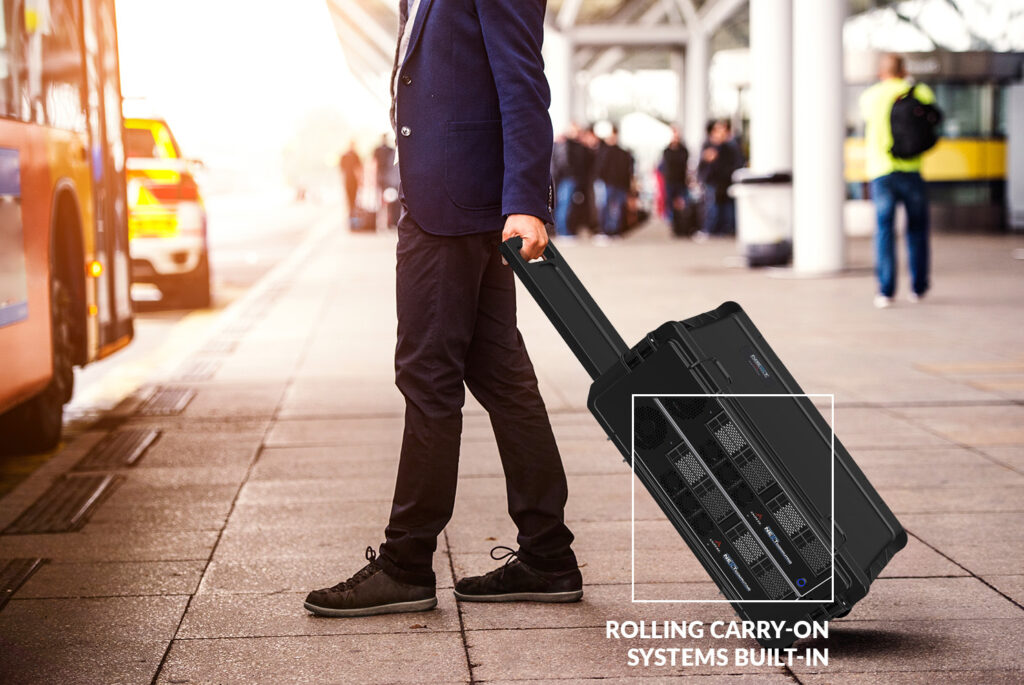
Fly-Away Kits
NextComputing Fly-Away Kits (FAKs) are a self-contained suite of equipment (hardware and software) in a compact, portable form factor for a variety of use cases where location and portability are key factors.
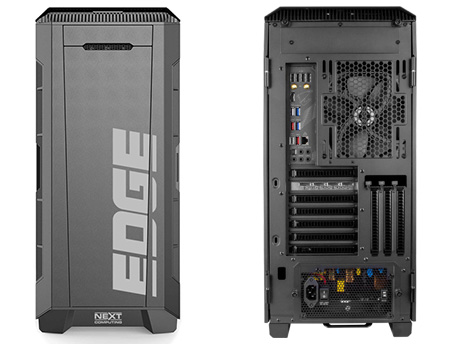
Edge XTP
The Edge XTP tower workstation is a professional-grade platform powered by the Ampere family of high-performance, scalable, power-efficient processors for demanding data-intensive, edge and cloud applications

NextServer-X 2U
The intelligent, compact design of the NextServer-X 2U allows for both easy transport and expandability. Whether you need cyber analytics in the field, or the flexibility to grow your toolset with your changing needs, the NextServer-X 2U deployable server lets you bring your server applications to the network edge.